Get DeafLetter
A weekly selection of signals, vulnerabilities and guides. Critical alerts remain optional.
You can unsubscribe at any time. Privacy policy.
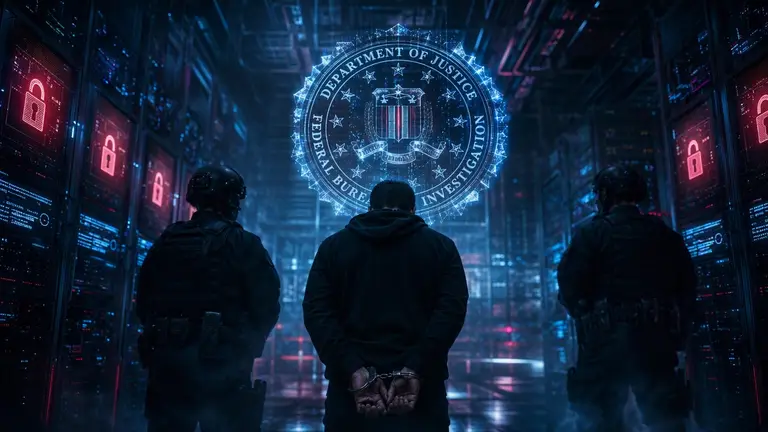
Edward Dubrovsky, a 54-year-old Canadian and well-known figure in the ransomware negotiation sector, was arrested by the FBI on Oct. 8, 2026, in Pennsylvania on charges of conspiracy to extort by threatening the confidentiality of information. The arrest took place while Dubrovsky was attending the Cyber Risk Summit in Philadelphia and is linked to the federal investigation into the ShinyHunters group, raising unprecedented questions about the legality of activities conducted by those who negotiate daily with malicious actors on behalf of victims.
- Dubrovsky is charged with conspiracy under the Computer Fraud and Abuse Act (18 U.S.C. § 1030(a)(7)(B)) and interference with commerce under the Hobbs Act (18 U.S.C. § 1951), carrying a maximum penalty of up to 20 years in prison.
- He served as managing director of Cypfer from May 2022 to December 2025, not founder as stated on LinkedIn; the company issued an official statement correcting his role.
- The case was transferred from the Eastern District of Pennsylvania to the Eastern District of Texas, where the FBI has centralized the ShinyHunters investigation.
- FBI Director Kash Patel confirmed on X the arrest of "another suspected co-conspirator" of the group without naming Dubrovsky.
From the Philadelphia Summit to a Federal Cell
According to KrebsOnSecurity, which spoke with sources close to the investigation, Dubrovsky was in Philadelphia for the Cyber Risk Summit scheduled for Oct. 5–7, 2026, at the Loews Hotel. The arrest occurred the day after the event concluded. Jail records indicate he was held at the Federal Detention Center in Philadelphia, with no release date listed.
Court records, partially sealed, show the case was opened in the Eastern District of Pennsylvania and transferred within 24 hours to the Eastern District of Texas. The transfer carries operational significance: Texas is the epicenter of the ShinyHunters investigation, the collective the FBI attributes with roughly $70 million in total extortion in 2026.
Professional Profile: Who Is Dubrovsky
Dubrovsky built a reputation as a specialist in negotiating with extortion actors. He was managing director of Cypfer, a North American incident response firm, from May 2022 to December 2025. Cypfer publicly clarified that Dubrovsky was never a founder of the company, correcting an initial reconstruction that appeared on LinkedIn and was initially picked up by KrebsOnSecurity.
Before or alongside Cypfer, Dubrovsky is associated with CyberSteward, based in Toronto, which advertises services for "threat actor engagement, cyber-extortions, complex negotiations, and settlement facilitation." The exact nature of the relationship — employee, consultant, or ad hoc engagement — does not appear in public records. Dubrovsky also self-published a 252-page manual titled "Cyber Extortion Strategic Response," presented as a strategic guide for handling cyber extortion.
"Looking forward to continuing conversations around strategy & compliant driven coercive (ransomware, extortion) advisory, negotiations and settlement services that are global and truly agnostic" — Edward Dubrovsky, LinkedIn post published roughly one month before the arrest.
The Distinction the Case Tests
The legal core of the charge against Dubrovsky is not negotiation per se, but conspiracy to threaten damage to the confidentiality of information in order to extort money. The CFAA and the Hobbs Act, both cited in the indictment, punish computer extortion and interference with commerce through coercion, respectively. What prosecutors must prove is that Dubrovsky actively participated in the threat, not merely negotiated to mitigate its effects.
This distinction defines the legal boundary of the entire sector. Ransomware negotiators operate by definition in structural proximity to criminals: they manage communication channels, move payment flows, and deal with asymmetric information that victims cannot verify. The very nature of the work creates inherent conflicts of interest. The industry has so far regulated itself through internal ethical norms and the good faith of the parties; a criminal charge against a recognized professional subjects this equilibrium to an unprecedented stress test.
Why It Matters
The Dubrovsky case does not provide sufficient operational details for specific recommendations: the indictment is sealed and no corrective measures have been publicly documented.
The dossier does not specify the concrete conduct that motivated the arrest, nor whether other defendants exist in the Texas proceedings. It is also unknown whether CyberSteward or Cypfer were aware of Dubrovsky's alleged activities, or whether the investigation concerns a specific victim or a general conspiracy.
The practical impact, however, is immediate. Insurance companies and breach victims may revisit due-diligence protocols for negotiators they authorize to speak with extortionists. Trust between victims and incident-response consultants, a functional element of crisis management, risks eroding if the profession itself appears exposed to criminalization.
Jeff Wichman, senior director of breach preparedness and response at Semperis, commented: "I think these incidents are likely to put additional pressure on ransomware negotiation firms to strengthen their background check processes." His observation does not concern Dubrovsky's guilt, which remains to be determined, but the strengthened controls the sector will now face.
The ShinyHunters Context and the Urgency of the Investigation
Dubrovsky's arrest is part of a series of FBI actions against the ShinyHunters group. In September 2026, Dutch authorities arrested a hacker linked to the same collective; in October, the FBI publicly attributed the breach of the federal agency recruitment site apply.fbijobs.gov to ShinyHunters, exposing data of more than 5,000 employees including medical and psychiatric records. According to the FBI, ShinyHunters extorted roughly $70 million in 2026 alone.
Director Kash Patel posted on X on Oct. 9: "Our agents in the field have arrested another suspected co-conspirator of the ShinyHunters group – the group believed to be responsible for the recent FBIjobs.gov incident, which occurred on a platform managed by a third-party vendor." Patel did not name Dubrovsky; the connection between the post and the arrest was established by KrebsOnSecurity's investigative sources and the temporal coincidence with the case transfer to Texas.
The Watchword Is "Agnostic"
Dubrovsky's LinkedIn post, published roughly one month before the arrest, promoted services that are "truly agnostic" — global and neutral with respect to context. The manual he wrote emphasized a "critical distinction": communicating with a criminal is not equivalent to negotiating a payment, and negotiating does not commit to paying. This same rhetoric, designed to legitimize a trade on the margins of the law, could be used by prosecutors to demonstrate awareness of the gray zone in which he operated.
Professional neutrality, framed as "agnosticism" toward malicious actors, has become the industry paradigm. The Dubrovsky case highlights that federal prosecutors may not accept this framing: criminal conspiracy does not require the defendant to share the criminal's ideology, only the illicit objective. If the evidence supports this scenario, the line between "mitigation" and "participation" will shift significantly to the detriment of the sector.
The trial will take place in the Eastern District of Texas, where Dubrovsky was initially represented by attorneys from the Federal Defenders office. No private counsel has yet appeared in the docket. The partial secrecy of the indictment leaves central questions open: whether Dubrovsky had an operational role within ShinyHunters, whether he merely facilitated payments, or whether the charge rests on an expansive interpretation of negotiation itself as participation in the threat.
Sources
- https://www.darkreading.com/insider-threats/prominent-ransomware-negotiator-extortion-charges
- https://www.foxbusiness.com/fox-news-tech/canadian-ransomware-negotiator-arrested-federal-charges-amid-fbi-hacking-probe
- https://www.usnews.com/news/top-news/articles/2026-10-10/canadian-ransomware-negotiator-arrested-amid-fbi-hacker-crackdown
- https://www.cp24.com/news/canada/2026/10/13/canadian-ransomware-negotiator-arrested-amid-fbi-hacker-crackdown/
- https://krebsonsecurity.com/2026/10/fbi-arrests-founder-of-ransomware-negotiation-firm/
- https://shattered.io/fbi-arrests-cypfer-founder-dubrovsky-2026/
- https://krebsonsecurity.com/2026/09/dutch-police-arrest-reformed-hacker-in-shiny-hunters-investigation/
- https://krebsonsecurity.com/2026/10/shinyhunters-extorted-boeing-spin-off-prior-to-arrests/
Information verified against cited sources and current as of publication.
Sources
Get DeafLetter
A weekly selection of signals, vulnerabilities and guides. Critical alerts remain optional.
You can unsubscribe at any time. Privacy policy.