Get DeafLetter
A weekly selection of signals, vulnerabilities and guides. Critical alerts remain optional.
You can unsubscribe at any time. Privacy policy.
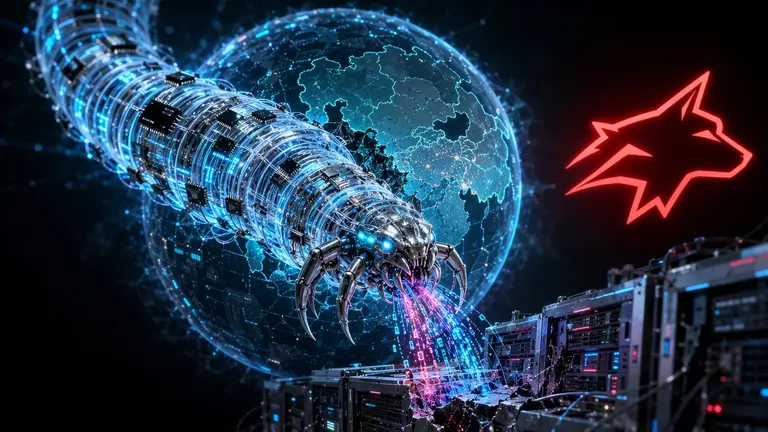
Bitdefender has discovered and documented SilkParasite, a cyber-espionage operation active since late 2025 that targeted government institutions in six countries across Central Asia and the South Caucasus. The disclosure, published on August 19, 2026, reveals a China-nexus threat actor integrating AI tools into the malware development workflow without degrading operational quality — a transition signal defenders must learn to recognize.
- Bitdefender identified seven malware families, five previously undocumented, with a plugin-oriented architecture distributed across four programming languages.
- DriveSilkRAT, the most prevalent family with approximately 65 observed infections, hides command-and-control inside ordinary Google Drive traffic, rendering C2 invisible to network-based monitoring tools.
- Delivery occurs via "passive" DLL sideloading: operators personally bring legitimately signed binaries that load malicious libraries from unusual paths.
- Bitdefender attributes the campaign to a China-nexus threat actor with medium confidence, based on technical indicators, victim profile, and temporal patterns consistent with the UTC+8 time zone.
The Discovery: From a Single Infection to an Ecosystem of Seven RATs
In late 2025, around October, a single suspicious detection at a government economic institution in a Central Asian country triggered months of forensic investigation. Bitdefender reconstructed an operation active for roughly a year, with seven malware families sharing a modular architecture and regionally consistent objectives.
The five novel families were named DriveSilkRAT, NomadRAT, GoginRAT, NodeEdgeRAT, and a fifth not explicitly named across all sources. BloodAlchemy, one of the two previously known families, sits in the ShadowPad → Deed RAT lineage, a tooling heritage associated with Chinese espionage groups. This connection does not identify a single actor: as Bitdefender's Martin Zugec clarified, "shared tooling ecosystems are not the same thing as a single controlling actor."
Nearly every tool implements a plugin-oriented architecture, with 12 custom .NET plugins in DriveSilkRAT for remote administration tasks. The seven families span four programming languages — .NET, C++, Go, JavaScript — a diversification suggesting parallel development rather than sequential evolution of a single codebase.
The Invisible C2: When Google Drive Is the Backdoor
DriveSilkRAT breaks the paradigm of command-and-control on dedicated servers. The family connects to a shared Google Drive folder: C2 traffic is indistinguishable from ordinary service traffic, passing through the same TLS infrastructure and Google domains. For network monitors, no anomaly exists to flag.
Bitdefender analyzed 37 operator commands from Google Drive's server-side timestamps, reconstructing a temporal pattern pointing to the UTC+8 time zone. This data, combined with IP addresses linked to China Unicom and SpiceRAT's connection to the SneakyChef cluster documented by Cisco Talos, feeds the China-nexus attribution — explicitly qualified as medium confidence by the vendor.
Initial delivery occurs via DLL sideloading in a "passive" form: operators do not exploit vulnerabilities in library loading but personally bring the legitimately signed binary and place it alongside the malicious DLL. As Bitdefender observed, "the reliable signal is not the DLL name alone, but the pairing: a legitimately signed application loading a library from an unusual path."
AI-Assisted, Not AI-Generated: The Difference That Changes Detection
Bitdefender draws a sharp distinction between two modes of AI integration in threats. AI-generated produces volume, mediocrity, and collapse under increasing complexity. AI-assisted, documented in SilkParasite, sees professional APT operators use AI to accelerate while maintaining engineering quality.
"SilkParasite is primarily assisted: capable humans do the engineering and lean on AI to move faster, leaving behind a few tells but none of the degradation"
Recognizable "tells" include code placeholders, hardcoded encryption keys with generic patterns — NodeEdgeRAT's configuration field set to the literal 'change_this_key', the AES key '0123456789abcdef' in GoginRAT — and duplicated cross-language architectures: NomadRAT and GoginRAT share a similar structure implemented in two different languages, suggesting a single design exported via AI-assisted workflow. Two spearphishing lures were unmistakably AI-generated, with regionally tailored content for Uzbekistan, Turkmenistan, Kyrgyzstan, Tajikistan, Kazakhstan, and Georgia.
The delivery macro implements a specific check: it verifies whether Kaspersky's avp.exe is running and adapts behavior accordingly. This AV-specific evasion indicates regional targeting intelligence, not indiscriminate spread.
The Geopolitical Context: Economy, Influence, and the Post-Soviet Vacuum
The targeting reflects a geography of intensified competition. As Martin Zugec analyzed, "the decline of Russian influence in Central Asia and the South Caucasus since the 2022 invasion of Ukraine has opened a vacuum that China is filling economically. As economic engagement deepens, the officials shaping those political and economic relationships become natural intelligence targets."
The lures impersonated specific ministries, with seemingly legitimate documents for the region's economic-diplomatic context. A document for Georgia was recovered from a public platform, though the exact operational context of that targeting was not clarified in the report. Bitdefender documented links to previous campaigns like FamousSparrow but explicitly declined to reduce SilkParasite to a named-group attribution: IP-level analysis remains circumstantial.
What to Do Now
- Monitor process-library pairing, not just file signatures: behavioral detection of signed applications loading DLLs from unusual paths is the most reliable signal against SilkParasite's passive sideloading.
- Analyze Google Drive traffic for anomalous shared-folder patterns: C2 via trusted cloud services requires inspection of user behavior and access frequency, not just destination domain.
- Update Office macro detection rules to include AV-specific environment checks: the Kaspersky evasion logic observed in SilkParasite anticipates similar techniques in other regions.
- Assess the geopolitical context of targeting: economic and diplomatic institutions in areas of contested influence require a threat-intelligence vigilance level proportionate to geopolitical dynamics, not just the threat's technical profile.
Frequently Asked Questions
Is SilkParasite the first documented case of AI-assisted malware?
It is the first documented case with this level of detailed technical evidence and this clear a distinction between AI-assisted and AI-generated modes. Bitdefender explicitly positions SilkParasite as an operational transition signal, not an isolated precedent.
Why is Google Drive not considered "compromised"?
The service functions normally: the anomaly lies in the operators' usage pattern, not in a platform vulnerability. This distinction is central to understanding LOTS (Living Off Trusted Services) techniques.
What is the risk of overstating AI's role in this campaign?
The risk is inverting the proportion: malware engineering remains professional human work, AI accelerates selectively. The defensive error would be hunting for "AI-generated" signatures instead of focusing on anomalous process behavior, which remains the robust signal regardless of code provenance.
Information verified against cited sources and current as of publication.
Sources
- https://therecord.media/china-cyber-espionage-central-asia
- https://radar.offseq.com/threat/silkparasite-tracking-a-china-nexus-apt-across-central-asia-b0ac0d2f3b5eeb3d
- https://www.hendryadrian.com/chinas-silkparasite-espionage-operation-targeting-central-asia-with-ai-assisted-malware/
- https://thehackernews.com/2026/08/silkparasite-espionage-campaign-targets.html
- https://industrialcyber.co/ransomware/bitdefender-traces-silkparasite-cyberespionage-campaign-across-central-asia-to-seven-rat-families-china-nexus-tooling/
- https://www.bitdefender.com/en-gb/blog/businessinsights/silkparasite-tracking-china-nexus-apt-across-central-asia
- https://therecord.media/nsa-fbi-warns-of-hackers-using-ai-generated-tools-critical-infrastructure
- https://thehackernews.com/2025/01/uac-0063-expands-cyber-attacks-to.html
- https://thehackernews.com/2026/05/azerbaijani-energy-firm-hit-by-repeated.html
Get DeafLetter
A weekly selection of signals, vulnerabilities and guides. Critical alerts remain optional.
You can unsubscribe at any time. Privacy policy.