Get DeafLetter
A weekly selection of signals, vulnerabilities and guides. Critical alerts remain optional.
You can unsubscribe at any time. Privacy policy.
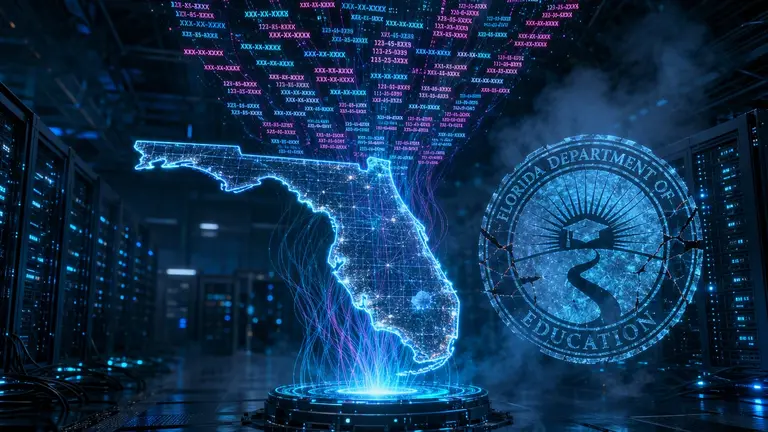
The Florida Department of Education (FLDOE) detected unauthorized access to FloridaStudentFinancialAidSG.org on October 19, 2026. The potentially exposed data includes Social Security numbers, names, addresses, phone numbers, genders, email addresses, and dates of birth for approximately 4.9 million individuals who applied for state financial aid for education. Ten days after discovery, the site remains offline, and the FLDOE has released no tool for individuals to verify their data exposure nor announced free credit monitoring programs.
Editor's note: No primary security source has technically analyzed the incident. Information comes from FLDOE statements reported by news outlets.
- The FLDOE detected unauthorized access on October 19, 2026; the FloridaStudentFinancialAidSG.org site was taken offline and remains under maintenance.
- Potentially exposed data includes SSNs, names, addresses, phone numbers, email, gender, and date of birth for roughly 4.9 million financial aid applicants.
- The FLDOE states that not all individuals whose data resided in the system were necessarily affected.
- No individual verification tool has been published and no free credit monitoring specific to this incident has been announced.
Scope of the Compromise
According to the FLDOE statement cited by The Record, "an unauthorized party gained access to a system or database containing business or customer information." The source characterizes the incident as "unauthorized criminal access" but does not indicate the technical vector used nor the actual duration of the compromise before detection.
The FLDOE believes the incident was limited to the Florida Student Financial Aid site. The agency coordinated its response with the Florida Digital Service and the Florida Department of Law Enforcement, and reported the event to the Florida Office of the Attorney General. The site was taken offline; sources indicate possible temporary disruptions to other services.
Current financial aid is not at risk and there will be no delays in disbursements, according to the statement cited by The Record. The FLDOE has not commented on the nature of the incident or the identity of the attackers.
What to Do Now
Potentially affected individuals can contact the three major U.S. credit bureaus (Equifax, Experian, TransUnion) to request a free credit freeze. A freeze makes it harder to open new lines of credit in the account holder's name without an explicit thaw, as noted by CiberCuba reporting FLDOE recommendations.
Individuals can request a free annual credit report at AnnualCreditReport.com, the portal authorized by the three credit bureaus. The FLDOE has not specified the guaranteed effectiveness of this measure in detecting unauthorized inquiries.
The FLDOE has not published a tool to verify individually whether one's data was compromised in the incident. The absence of this tool prevents calibrating the alert level on an individual basis.
The FloridaStudentFinancialAidSG.org site has been offline for ten days; anyone who needs to submit or verify a financial aid application must wait for restoration or contact the FLDOE directly through alternative channels.
"The security of student and family information is a responsibility we take seriously. The Department acted swiftly to block unauthorized access, contain the breach, and secure its systems" — Florida Department of Education, response to Phoenix cited by Yahoo News
Comparison with Institutional Response: The Florida DMV Case
A comparison with a previous Florida incident highlights differences in institutional response. In the Florida DMV breach attributed to ShinyHunters, documented separately by The Record, free credit monitoring was offered to affected individuals. For the FloridaStudentFinancialAidSG.org breach, the FLDOE has not announced a similar program, according to CiberCuba.
This difference does not imply a qualitative judgment on the two responses, but documents variability in notification and support practices across state institutional incidents.
Implications for Aid Applicants
The absence of an individual verification tool and specific free credit monitoring leaves potentially affected individuals in a position of operational uncertainty. Unable to confirm whether their data was actually compromised, applicants must decide independently whether to activate defensive measures.
The FLDOE has confirmed that current financial aid is not at risk and there will be no disbursement delays. This statement, reported by The Record, concerns only service continuity, not the protection of data already exposed.
The site being offline for ten days adds a service access problem: those who need to complete or verify a financial aid application cannot do so through the normal channel. The FLDOE has not indicated restoration timelines in the sources consulted.
Source Limitations and Documented Uncertainties
The dossier contains no technical analysis of the attack vector, the actual duration of the compromise before October 19, nor confirmation of data exfiltration. No claim by criminal groups has been identified, nor has a security advisory with a specific CVE been published.
The FLDOE has not commented on whether the data was offered for sale or published on criminal forums. The figure of 4.9 million potentially affected individuals, repeated by multiple editorial sources, refers to the perimeter of data in the system, not the number of individuals actually compromised.
Sources
Get DeafLetter
A weekly selection of signals, vulnerabilities and guides. Critical alerts remain optional.
You can unsubscribe at any time. Privacy policy.