Get DeafLetter
A weekly selection of signals, vulnerabilities and guides. Critical alerts remain optional.
You can unsubscribe at any time. Privacy policy.
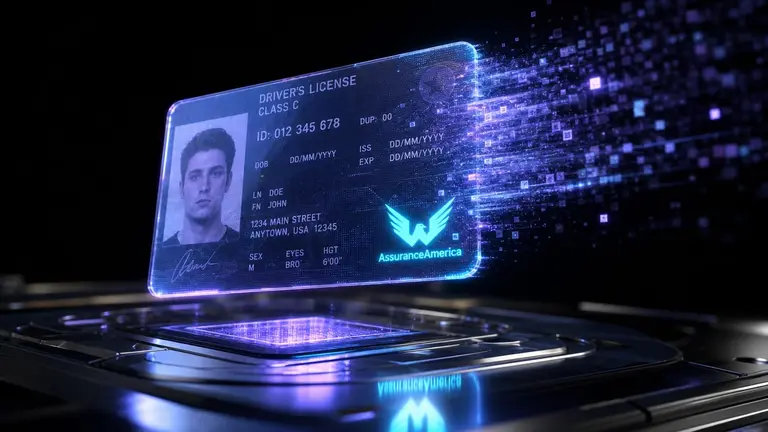
AssuranceAmerica has notified a data breach exposing 6,998,886 individuals, with notification letters set to begin on July 10, 2026. The most serious aspect is not the numerical scale, but the nature of the stolen information: driver's license numbers combined with complete insurance and personal data, in an industry that continues to suffer compromises through single employee accounts without offering effective remediation tools.
- The compromise occurred on March 16, 2026; detection was on March 17, but notification is delayed until July 10 due to the complexity of the file review.
- The access vector was a single employee account, with credentials subsequently disabled; sources do not converge on the exact theft mechanism.
- Exposed data includes names, contact information, driver's license numbers, policy information, vehicle/driver data, and claims materials.
- The company is not offering free credit monitoring services to victims, limiting itself to password resets and additional threat detection tools.
"Because of the nature of the files involved and the scope of the required review, this file evaluation process was only recently completed (on June 15, 2026), and we are now providing this notice."
How the Attacker Got In: One Account, Zero Technical Details
Malicious activity targeted an AssuranceAmerica employee on March 16, 2026. The company detected the anomaly the following day. This emerges from official notifications cited by TechCrunch and BleepingComputer, which had direct access to the breach letter text and Maine Attorney General documents.
Cybernews adds the characterization "phishing attack," but this label does not appear verbatim in the corporate notification and is therefore an editorial inference. Primary sources only indicate that the compromised credentials were disabled. The precise mechanism — phishing, malware, social engineering, or other — remains unspecified in the available dossier.
The timeline is compressed: detection in 24 hours, but an investigation stretching to June 15 due to "the nature of the files involved and the scope of the required review." Three months of forensic analysis on an IT environment managing 9,500 independent agents across 14 U.S. states, with an estimated $499 million in revenue and over 500 employees. The latency is not technically anomalous for contexts with data distributed across multiple legacy systems, but it highlights operational complexity that slowed victim response.
The Driver's License Problem: Non-Rotatable Identity
The difference between this breach and a typical web credential leak lies in the data type. A driver's license number cannot be changed with a click. There is no "password reset" for a state-issued identity document, with bureaucratic timelines varying by jurisdiction and associated costs. According to TechCrunch, this is the "largest known leak of U.S. driver's license information this year."
The dossier does not specify the full geographic distribution of victims; Cybernews mentions seven states (California, Massachusetts, Nebraska, South Carolina, Texas, Vermont, Washington, Florida) but does not clarify whether this represents the entire set or a subset. The absence of free credit monitoring offered by AssuranceAmerica leaves victims to independently detect fraudulent uses of their identity.
The context amplifies the severity: identity verification platforms, sharing services, financial institutions, and increasingly digital marketplaces require the license as proof-of-identity. A compromised license number with associated personal and insurance data constitutes a near-complete identity kit for document synthesis or account opening fraud.
The Insurance Sector as a Systemic Target
AssuranceAmerica is not an isolated outlier. The concentration of PII in the insurance sector — health data in life policies, driving behaviors in auto policies, agent networks with distributed access — creates a structurally amplified attack surface. Contextual sources in the dossier cite other breaches in the sector, but these are separate incidents and should not be conflated with this specific one.
The official notification lists post-incident countermeasures: disabling unauthorized sessions, isolating affected systems, password resets, deployment of advanced monitoring and threat detection, additional staff training on cyber risks, and law enforcement notification. These actions are all reactive. No primary source documents missing preventive controls — MFA, session management, segmentation — but the ability of a single account to expose 7 million records suggests insufficiently granular access architectures.
The absence of contact with attackers or ransom demands, verified by TechCrunch through a direct request to the company without response, rules out at least the classic ransomware profile. The dossier does not document whether the data was subsequently published or sold.
Why This Matters
The dossier does not specify whether regulatory investigations are underway beyond the notification obligation; the Maine AG portal is offline following a fraudulent false disclosure the previous month, complicating public verification. TechCrunch obtained a copy of the document directly, bypassing the portal.
The brief does not document specific remedial measures for victims beyond the notification itself. No offer of identity protection services, credit locks, or support for license replacement emerges. The company has not declared whether employees were involved as secondary victims or whether specific training programs with defined technical content were initiated.
The systemic impact remains to be quantified: 7 million exposed licenses in an ecosystem where identity verification is accelerating creates a long-duration problem that transcends the single compromise. The source provides no projections on fraudulent abuse or exploitation trends.
The case confirms a pattern: sectors with high PII loads, extensive brokerage networks, and legacy architectures tend to repeat the same compromise schema — single employee account, lateral movement, mass exfiltration, delayed notification, limited remediation. The driver's license, as a persistent and non-revocable identifier, is the friction point that makes every repetition of this schema more costly for the end victim.
Information has been verified against cited sources and updated at time of publication.
Sources
- https://www.bleepingcomputer.com/news/security/assuranceamerica-data-breach-exposes-records-of-69-million-drivers/
- https://www.infosecurity-magazine.com/news/us-insurance-regulator-confirms/
- https://darkwebinformer.com/assuranceamerica-data-breach-exposes-drivers-license-numbers-of-6-99-million-people/
- https://techcrunch.com/2026/07/08/another-massive-data-breach-exposed-millions-of-drivers-license-numbers/
- https://cybernews.com/news/assuranceamerica-insurance-breach-7-million-drivers-license-records/
- https://this.weekinsecurity.com/
- https://www.bleepingcomputer.com/
- https://www.bleepingcomputer.com/tutorials/
- https://www.bleepingcomputer.com/download/
- https://deals.bleepingcomputer.com/
Get DeafLetter
A weekly selection of signals, vulnerabilities and guides. Critical alerts remain optional.
You can unsubscribe at any time. Privacy policy.