Get DeafLetter
A weekly selection of signals, vulnerabilities and guides. Critical alerts remain optional.
You can unsubscribe at any time. Privacy policy.
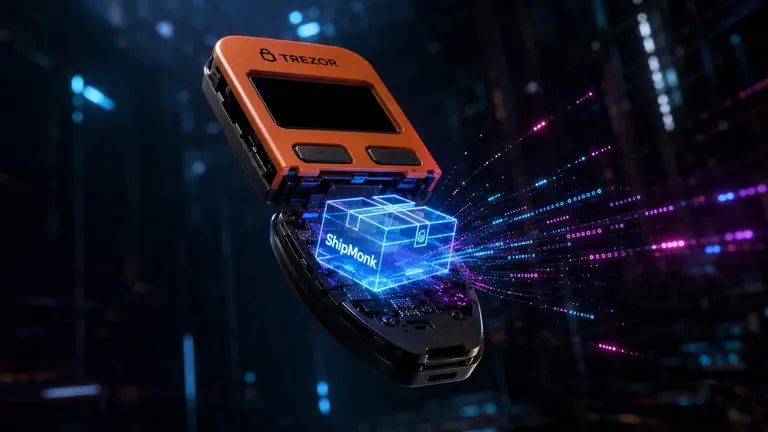
On August 10, 2026, ShipMonk notified Trezor of unauthorized access to systems containing customer order data. The incident exposed names, email addresses, phone numbers, and shipping addresses for 11,742 customers, plus names, cities, and email addresses for another 1,947 — 13,689 people in total, covering orders placed between May 10 and August 8, 2026. The case reveals a structural contradiction in the industry: a hardware wallet promises financial anonymity, but to reach the buyer it must traverse a physical logistics chain that is inherently identifiable.
- 13,689 Trezor customers affected: 11,742 with full exposure (name, email, phone, address), 1,947 with partial exposure (name, city, email)
- Period covered: orders from May 10 to August 8, 2026; notification from ShipMonk to Trezor on August 10, 2026
- Countries involved: United States, United Kingdom, Sweden, Colombia, Brazil, Italy, Portugal
- Trezor states its own systems, hardware devices, and firmware were not compromised; ShipMonk has "secured and hardened the affected systems"
The Scope of the Damage: What Was Exposed and What Wasn't
The compromised data pertains exclusively to the logistics chain. According to CyberSecurityNews, which reports Trezor's official disclosure, the 11,742 customers with full exposure had their names, email addresses, phone numbers, and shipping addresses leaked. The remaining 1,947 have a partial profile: name, city, and email. Trezor's systems, hardware wallets, and firmware were not compromised, as consistently stated across all four converging editorial sources.
The affected order timeline spans May 10 to August 8, 2026. Trezor operates a 90-day retention policy with its fulfillment partners, a measure that limited the temporal scope of the exposed data. According to the cited source, this is the first time since the company's founding in 2013 that a breach has exposed customer phone numbers and shipping addresses.
The Invisible Vector: Attack on the Physical Supply Chain
The dossier does not specify the attack vector used against ShipMonk's systems, nor the actual date of the unauthorized access. ShipMonk informed Trezor of the incident on August 10, 2026; the investigation remains ongoing, as reported by The Defiant citing the official statement. No threat actor attribution or confirmed motives have emerged.
The structural problem is clear: physical fulfillment requires inherently identifying data. A hardware wallet cannot be delivered to anonymous geographic coordinates without dedicated infrastructure. Trezor is developing an "Anonymous Delivery" option, featuring locker pickup, neutral packaging, and automatic deletion of identifiers post-delivery. The launch target is September 2026 for the European Union and late 2026 for the United States, according to the same sources. This solution acknowledges that the problem is not technical but logistical: minimal 90-day retention reduces the exposure window but does not eliminate the active period during which the third-party partner holds the data.
The Concrete Risk: From Digital Phishing to Physical Threats
The exposure of addresses and phone numbers shifts the risk from digital to physical. Yellow, in the risk analysis cited in the dossier, summarizes: "The immediate danger is fraud, not theft from the devices themselves." A hardware wallet buyer is a high-value target: they hold self-custodied digital assets and can be reached with personalized messages citing real data. Letters, phone calls, or emails that reference the actual shipping address lower perceptual defenses compared to generic phishing.
The dossier does not document actual use of the exposed data for ongoing attacks. The impact remains in the realm of plausible risk, not confirmed observation. The source does not specify the nature of any residual data in ShipMonk's systems beyond the declared fields, nor the presence or absence of encryption at rest. ShipMonk has "secured and hardened the affected systems," but the dossier does not detail the technical countermeasures adopted.
"This is the first time since Trezor's founding in 2013 that a breach has exposed customer phone numbers and shipping addresses" — Trezor, reported by CyberSecurityNews
Why This Matters
The brief does not document specific remedial measures for affected users. Trezor has not issued detailed operational recommendations in the analyzed dossier. The dossier does not specify whether Trezor will continue using ShipMonk as a logistics partner.
The source does not clarify whether the data was actually accessed or exfiltrated, or if the exposure was only potential. No infrastructure overlap emerges linking this incident to the 2024 breach that exposed data for 66,000 Trezor support users, as documented by BleepingComputer in a distinct incident.
Anonymous Delivery represents an explicit acknowledgment: the standard e-commerce logistics business model is incompatible with the crypto sector's privacy promise. This is not an add-on feature but a structural course correction. The dossier does not specify whether other hardware wallet vendors have implemented similar solutions, nor whether the 90-day retention is an industry standard or a specific Trezor contractual policy.
The Delivery Paradox: When Digital Anonymity Meets a Real Address
The Trezor-ShipMonk case highlights an underestimated tension in the crypto sector: device security and delivery security are two distinct perimeters. A cold wallet can resist sophisticated side-channel attacks, but the process that brings it to the user's doorstep traverses standardized infrastructure, third-party contracts, and variable retention policies.
The industry has focused on smart contract exploits, bridge vulnerabilities, and centralized exchange compromises. The physical supply chain has remained in the industry's threat modeling blind spot. The dossier does not indicate whether third-party security audits were conducted on ShipMonk's systems before or after the incident, nor whether compliance standards such as SOC 2 or ISO 27001 were in force.
For hardware wallet holders, the incident does not alter the device's own security posture. It does change the personal risk profile: home addresses and phone numbers are now intelligence data for targeted attacks, with a level of personalization that mass phishing cannot replicate. The source does not specify whether Trezor has offered identity monitoring services or legal support to those affected.
Frequently Asked Questions
Are funds on Trezor wallets at risk?
No. According to Trezor's official statement, the company's systems, hardware devices, and firmware were not compromised. The incident concerns exclusively the shipping data managed by logistics provider ShipMonk.
What is the Anonymous Delivery option announced by Trezor?
It is an option in development that provides delivery via lockers, neutral packaging, and automatic deletion of identifiers post-delivery. The launch target is September 2026 for the EU and late 2026 for the US, according to the cited sources.
Why is the 90-day retention policy relevant?
It limits the temporal window of historical data available on the logistics partner's systems. Without this policy, the exposure could have extended beyond the May–August 2026 period. The dossier does not specify whether this is an industry-standard practice or a specific Trezor contractual clause.
Information is based on the cited advisory and current as of publication.
Sources
- https://cybersecuritynews.com/trezor-shipmonk-data-breach/
- https://thedefiant.io/news/security/trezor-shipping-provider-breach-exposes-data-of-13-689-customers
- https://cryptobriefing.com/trezor-data-breach-13689-customers/
- https://yellow.com/news/trezor-warns-13689-customers-phishing
- https://www.bleepingcomputer.com/news/security/trezor-support-site-breach-exposes-personal-data-of-66-000-customers/
- https://any.run/enterprise/?utm_source=csn&utm_medium=links&utm_campaign=sandbox&utm_content=enterprise&utm_term=0626#contact-sales
Information is based on the cited source and current as of publication.
Sources
Get DeafLetter
A weekly selection of signals, vulnerabilities and guides. Critical alerts remain optional.
You can unsubscribe at any time. Privacy policy.