Get DeafLetter
A weekly selection of signals, vulnerabilities and guides. Critical alerts remain optional.
You can unsubscribe at any time. Privacy policy.
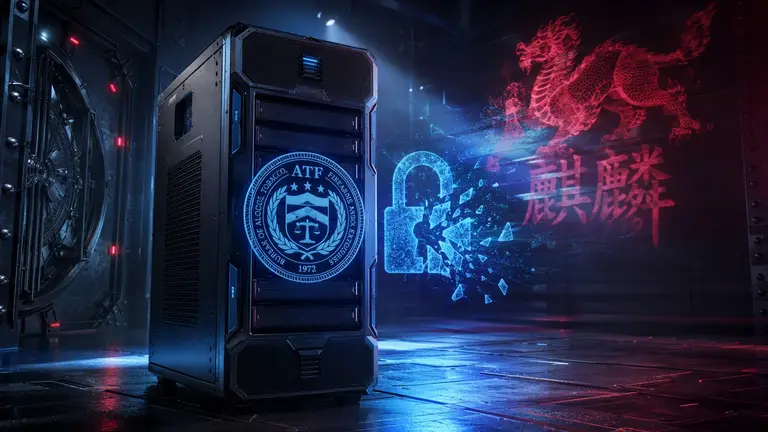
The Bureau of Alcohol, Tobacco, Firearms and Explosives (ATF) confirmed on August 26, 2026, a cybersecurity incident classified as a "major incident" on a standalone system containing information related to investigative targets. The federal agency responsible for firearms, explosives, and organized crime explicitly stated the compromised system was not connected to the enterprise network, case management systems, laboratories, or the eForms platform, and that no operational impacts occurred. The Qilin ransomware group added the ATF to its leak site hours before the official confirmation, without providing data samples or details of any extortion demand.
- The compromised system was standalone and isolated from the ATF enterprise network, according to spokesperson Tanya J. Roman as reported by The Record and Cybernews
- The system contained "information on ATF investigative targets"; the agency did not specify the volume or exact nature of the data
- ATF immediately severed connections to the affected environment and launched incident response and forensic activities, but has not attributed the attack to Qilin nor confirmed data access or exfiltration
- The Department of Justice designated the event a "major incident" under federal FISMA guidelines, with mandatory notifications completed
The Isolated Architecture That Contained the Damage
The most technically significant aspect of the incident is the architecture of the affected system. According to ATF spokesperson Tanya J. Roman, cited by The Record and Cybernews, the compromised system was "a standalone computer containing information on ATF investigative targets" and "was not connected to any other ATF system, including case management systems, laboratory systems, or eForms systems." The same source confirmed the system "was quickly powered down when the breach was discovered."
The ATF stated in a press release reported by BleepingComputer: "The impacted system operates separately from the ATF enterprise network, and there is no indication that the incident has affected the ATF enterprise network, the ATF eForms system, or any other ATF system." The agency added the incident "has not impacted agency operations" or the "ability to carry out its missions."
This configuration functioned as natural containment: the lack of connectivity to the enterprise network prevented lateral movement to more critical systems. What the dossier does not clarify is whether the isolation was a deliberate security-by-design architectural choice or an operational condition that limited the attack's blast radius for other reasons. The distinction has significant consequences for assessing the agency's security posture.
The Attribution Void and Qilin's Claim
The Qilin ransomware group added the ATF to its dark web leak site on August 26, 2026, as reported by BleepingComputer and Cybernews. The listing appeared without published data samples, without details of a ransom demand, and without documentary evidence of actual compromise. NYTimesPost explicitly cites "no evidence substantiating its claim," while GalaxyWarden stated it had not independently verified the claim.
The ATF, through cited sources, has not attributed the incident to Qilin or any specific actor. Spokesperson Roman told The Record: "This is an ongoing investigation, and no further details can be shared at this time." This attribution caution is consistent with federal investigative practice, but leaves open the possibility that Qilin's claim is speculative or refers to an access of a different nature than ransomware.
"891 victims claimed by Qilin in 2026 through August 26, according to Cybernews' Ransomlooker surveillance tool; 127 attacks in July 2026, making the group the second most active that month."
The "Major Incident" Designation and the 2026 Federal Context
The ATF incident fits a pattern of federal law enforcement agency compromises in 2026. According to NYTimesPost and Kobaran, senior Department of Justice officials designated the event a "major incident" under the FISMA framework, with mandatory notifications completed. This classification triggers coordinated response protocols and congressional reporting, independent of confirmation of actual data theft.
The dossier notes two prior 2026 incidents that serve as contextual references: the March breach of the FBI's wiretap system, classified as a major incident and attributed to China-linked actors, and the July compromise of the DHS HSIN system. This sequence intensifies scrutiny of the U.S. federal government's cyber posture, particularly for agencies handling sensitive information on ongoing investigations, witnesses, and informants.
Qilin: Operational Volume and Modus Operandi
The Qilin group, formerly known as Agenda, has claimed over 2,200 victims since 2022 according to leak site data aggregated by BleepingComputer. Documented victims include Nissan, Synnovis, Asahi, Lee Enterprises, and Court Services Victoria. According to Cybernews, citing its Ransomlooker surveillance tool, Qilin listed 891 victims in 2026 through the date of the ATF incident, with 127 attacks in July 2026 making it the second most active ransomware group that month.
The group operates as a Ransomware-as-a-Service (RaaS), a structure that distributes operational risk and amplifies attack volume through affiliates. Qilin's elevated 2026 activity, quantitatively documented by the cited source, indicates a persistent capability to compromise critical infrastructure and institutions. The ATF's presence on the leak site, even without public evidence, exploits institutional visibility to maximize psychological and media pressure.
Why It Matters
The incident raises questions the dossier does not resolve and the sources cannot close. The "standalone" nature of the compromised system is ambiguous: if the isolation was an intentional security barrier, the design worked as intended; if it was an operational condition not designed for protection, the containment was fortuitous. This distinction is not accessible from available sources.
The ATF has not confirmed whether data on investigative targets was actually accessed or exfiltrated. The mere confirmation of compromise of a system containing such information, combined with the lack of public evidence from Qilin, creates an asymmetric information risk situation: the agency manages sensitive operational information, while the ransomware group controls the public narrative through the leak site.
The brief does not specify whether the standalone system was internet-exposed, what access vector was used, whether a ransom demand was made, or if negotiations are underway. The ATF has established a public tip line at 1-888-ATF-TIPS (1-888-283-8477), indicating an external information-gathering channel separate from the internal investigation.
The 2026 pattern of federal breaches—FBI, DHS, ATF—does not allow establishing whether these incidents share common vectors, actors, or systemic vulnerabilities, but documents a frequency the brief cannot explain in causal terms. The absence of primary advisories from security vendors (Wiz, Snyk, Mandiant, CISA) limits access to technical details of the compromise vector.
Frequently Asked Questions
Has Qilin proven it possesses ATF data?
No. Sources agree Qilin added the ATF to its leak site without publishing data samples, without ransom demand details, and without evidence substantiating the claim.
Was the compromised system connected to other ATF networks?
No, according to the official ATF statement reported by multiple sources. The system was explicitly described as standalone, not connected to the enterprise network, case management systems, laboratories, or the eForms platform.
Has the ATF confirmed theft of investigative data?
No. The ATF confirmed the compromised system contained "information on investigative targets," but has not confirmed access, exfiltration, or actual theft of such data. The investigation is ongoing.
Information has been verified against cited sources and is current as of publication.
Sources
- https://www.bleepingcomputer.com/news/security/atf-confirms-major-incident-after-recent-qilin-breach-claims/
- https://therecord.media/doj-atf-cyberattack-qilin-ransomware
- https://www.infosecurity-magazine.com/news/reliaquest-not-compromised-by/
- https://radar.offseq.com/threat/atf-confirms-major-incident-after-recent-qilin-breach-claims-46888bbe5ef144b0
- https://nytimespost.com/atf-investigates-major-cybersecurity-incident-as-ransomware-group-claims-attack/
- https://cybernews.com/news/qilin-ransomware-bureau-alcohol-tobacco-firearms-atf-cyberattack/
- https://www.kobaran.com/atf-confirms-major-cybersecurity-incident-ransomware-group-claims-credit/
- https://radar.offseq.com/console
- https://radar.offseq.com/threats?sortBy=createdAt&sortOrder=desc
- https://breach.offseq.com/
- https://training.offseq.com/
- https://radar.offseq.com/threat/cve-2026-81677-cwe-89-improper-neutralization-of-special-elements-used-in-an-sql-command-sql-injection-3ffca3c327f36999
Get DeafLetter
A weekly selection of signals, vulnerabilities and guides. Critical alerts remain optional.
You can unsubscribe at any time. Privacy policy.