Get DeafLetter
A weekly selection of signals, vulnerabilities and guides. Critical alerts remain optional.
You can unsubscribe at any time. Privacy policy.
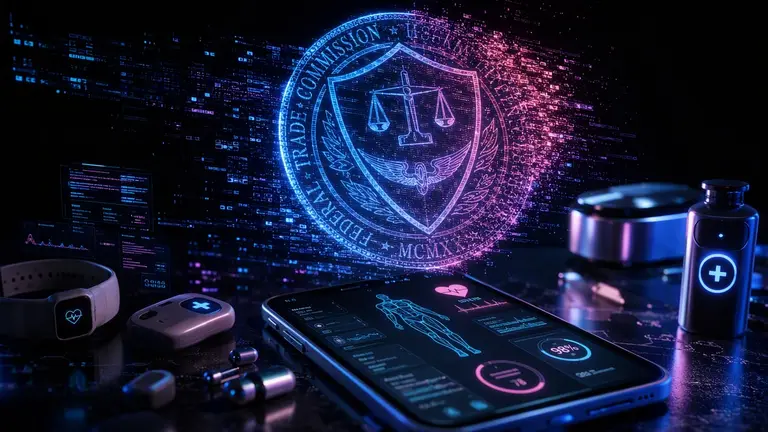
The Federal Trade Commission rescinded its 2021 Policy Statement on September 9, 2026, which had explicitly extended the Health Breach Notification Rule to health applications and connected devices. The decision was unanimous, but that unanimity stems from a Commission now composed entirely of Republican appointees following the Trump administration's dismissal of Democratic commissioners. The FTC justified the step by citing the guidance's obsolescence, superseded by a binding 2024 regulatory update, and a presidential executive order directing the elimination of superfluous regulation.
- The FTC revoked the 2021 Policy Statement on health app and connected device breaches, originally approved on a divided 3-2 vote under the Biden administration.
- The updated 2024 Health Breach Notification Rule continues to cover the same entities technically, making the rescission symbolic but not without interpretive consequences.
- The rescission vote was unanimous in a now single-party Republican Commission, after Trump fired the Democratic commissioners who had backed the 2021 policy.
- The official rationale explicitly cites alignment with the Trump executive order on deregulation and the removal of obsolete guidance.
The Distinction That Matters: Policy Statement vs. Rule
The technical-legal core of the matter lies in the difference between two regulatory instruments. The 2021 Policy Statement was an interpretive guidance, not a binding regulation. The FTC itself reiterated this in its announcement: the guidance "generally creates neither substantive rights nor binding obligations." Its function was to clarify the agency's intention to apply the Health Breach Notification Rule — originally conceived for electronic health record entities — to health apps and fitness trackers, a sector that until then sat in a regulatory void relative to HIPAA.
In 2024, the Commission updated the Rule precisely to cover these categories explicitly. At that point, according to the FTC, the 2021 Policy Statement became redundant. The rescission is therefore presented as administrative housekeeping, not a reduction in protections. The problem is that removing an interpretive guidance — even if technically superfluous — eliminates the expressed clarity on enforcement and the public documentation of agency priorities.
A Unanimous Vote Born From a Changed Composition
The Commission's composition explains the convergence of votes. The original policy was approved on a divided 3-2 vote under Chair Lina Khan, with the three Democrats in favor and the two Republicans opposed. In 2026, the Commission is chaired by Andrew Ferguson, a Republican nominated by Biden who now leads an FTC composed entirely of members of the same party. CyberScoop reports that Trump fired the Democratic commissioners who had supported the 2021 policy, advancing party allies as replacements.
The unanimity of the rescission vote is therefore a political data point, not necessarily a convergence on merit. The FTC's official statement does not mention the internal composition, but emphasizes that the policy was "contentious at the time of issuance" and that each of the reasons given "is independently sufficient to support the decision." The phrasing suggests the agency acknowledges the polarized nature of the original measure without having to detail current internal dynamics.
The Trump Executive Order and the Deregulatory Frame
"In an executive order, President Donald J. Trump directed agencies to eliminate not only unnecessary rules, but also obsolete guidance documents" — FTC, official statement of September 9, 2026
The link to the Trump administration is explicit and unmediated. The FTC directly cites the presidential executive order as the impetus for action, stating that the rescission "aligns the action with White House guidance to pursue a deregulatory agenda." This is the first time, in available sources, that a Trump executive order has been invoked by an independent agency to justify the removal of a specific guidance in the data protection sector.
The choice to make this alignment public has signaling value. Independent agencies traditionally emphasize their decisional autonomy. The FTC instead emphasizes continuity with the presidential directive, almost as if to pre-stamp the decision's legitimacy. CyberScoop notes that the decision "aligns the agency with the White House's deregulatory agenda," underscoring how the formula reads as an adherence rather than a mere observation.
What Changes
The rescission does not eliminate the Health Breach Notification Rule updated in 2024, but it removes the agency's explicit statement of intent on a rapidly expanding sector. Health apps and connected devices collect growing volumes of biometric and behavioral data, often sold to data brokers for advertising or insurance profiling purposes. The 2021 policy had included the unauthorized sale of such data within the definition of a breach, with fines up to $43,792 per violation.
The rule technically covers the same entities, but the absence of dedicated guidance increases interpretive uncertainty for industry operators. Sources do not report reactions from developers or trade associations, nor legal actions challenging the rescission. The concrete impact on consumer protections therefore remains a point to verify: the rule subsists, but the will to enforce it is now less documented.
The strongest signal may be the opening of a new deregulatory phase in sensitive-data sectors. If the FTC applies the same logic to other guidance in the field of health privacy and cybersecurity, the cumulative effect could be significant even without formal regulatory changes. The distinction between rule and policy statement, technically sound, becomes a tool to reduce enforcement visibility without having to undergo rulemaking processes.
Frequently Asked Questions
Are health apps no longer required to notify breaches?
Yes, they remain obligated. The Health Breach Notification Rule updated in 2024 continues to cover them technically. The rescission concerns only the 2021 interpretive Policy Statement, not the binding regulation.
What was the specific content of the 2021 policy?
The policy explicitly extended the Rule to health apps and connected devices, clarifying that the unauthorized sale of health data constituted a breach subject to notification, with penalties up to $43,792 per violation.
Can the FTC still sanction violations?
The source does not specify modifications to the FTC's sanctioning powers.
Sources
- https://cyberscoop.com/ftc-rescinds-health-app-data-breach-policy/
- https://www.ftc.gov/news-events/news/press-releases/2026/09/ftc-withdraws-obsolete-policy-statement
- https://cyberscoop.com/ai-healthcare-apps-hipaa-privacy-risks-openai-anthropic/
- https://cyberscoop.com/bedoya-slaughter-ftc-lawsuit-unlawful-dismissal-trump/
- https://www.ftc.gov/legal-library/browse/advisory-opinions
Get DeafLetter
A weekly selection of signals, vulnerabilities and guides. Critical alerts remain optional.
You can unsubscribe at any time. Privacy policy.